Shift-Left Security for Canadian SaaS: How SOC 2 Requirements Are Changing How Teams Build
SOC 2 Type II is now table stakes for Canadian B2B SaaS. How shift-left DevSecOps practices map to SOC 2 Trust Service Criteria - and how to automate evidence collection from your pipeline.
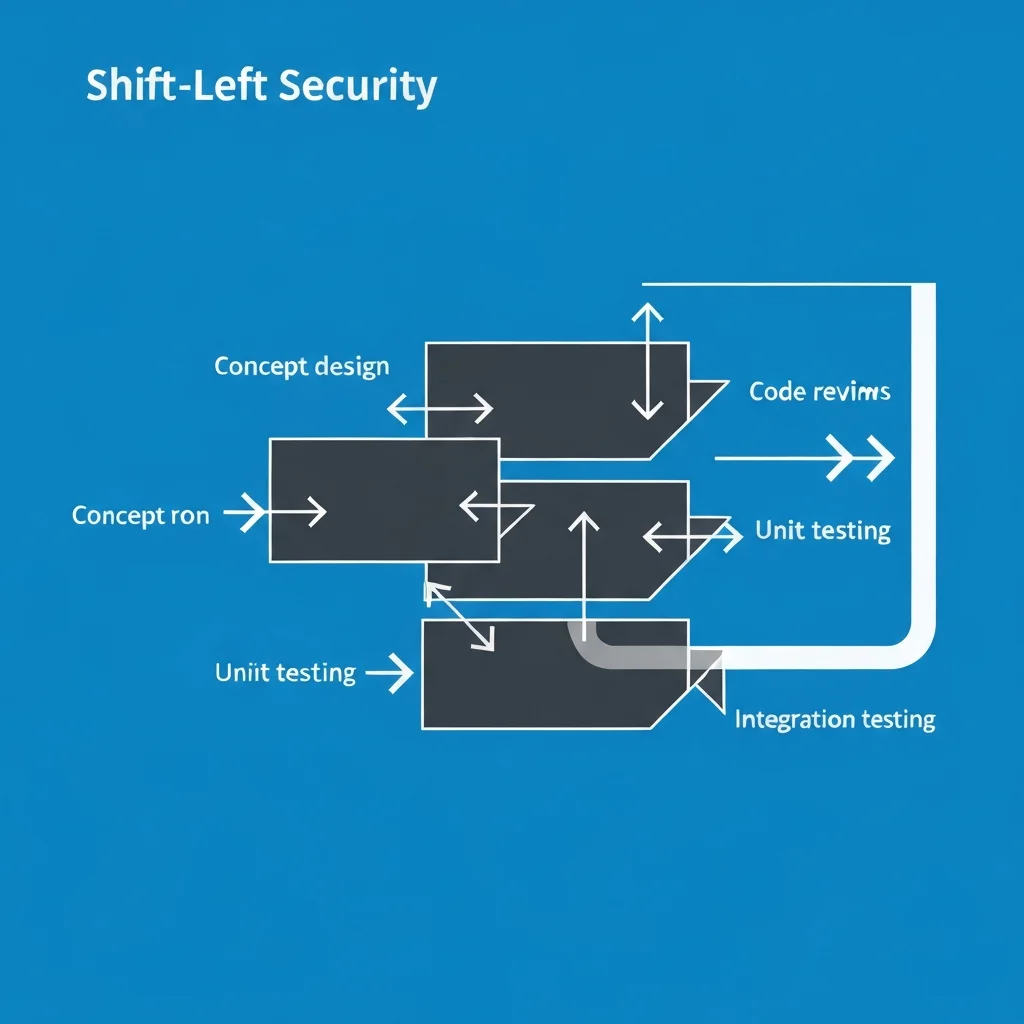
If you’re building B2B SaaS in Canada - whether in Toronto’s fintech corridor, Vancouver’s tech hub, or Montreal’s AI ecosystem - SOC 2 Type II has become the price of admission for enterprise sales. Enterprise procurement teams won’t evaluate your product without it. AWS Marketplace requires it. And Series B investors increasingly make it a closing condition.
The traditional path to SOC 2 - hiring a compliance consultant, standing up a compliance programme, spending 12-18 months - is incompatible with startup timelines. Shift-left security offers a faster path: build security controls into your CI/CD pipeline, and SOC 2 evidence generates itself.
SOC 2 as Enterprise Sales Gate
Canadian B2B SaaS companies are experiencing a consistent pattern: enterprise buyers requesting SOC 2 Type II during the procurement process. Not Type I (point-in-time), but Type II (operating effectiveness over a period). This means your controls need to have been working for 3-6 months before the audit - which means you need to start implementing now.
The specific asks from enterprise procurement:
- Security questionnaire responses citing SOC 2 controls
- SOC 2 Type II report shared under NDA
- Penetration test report from the last 12 months
- Data Processing Agreement with PIPEDA-specific clauses
Without SOC 2, you don’t get past the procurement checklist - regardless of how good your product is.
What Shift-Left Means for SOC 2 Trust Service Criteria
SOC 2 is built on Trust Service Criteria (TSC). Three of these map directly to DevSecOps pipeline controls:
CC6.1 - Logical Access Controls
SOC 2 requires evidence that logical access to systems is restricted to authorized users. In a shift-left model, this means:
- Branch protection rules requiring PR approval before merge
- Access reviews conducted periodically and evidenced
- Service account management with least-privilege access
- SSO and MFA enforced for all engineering tools
Every PR approval, every access review, every MFA enforcement becomes SOC 2 evidence automatically.
CC7.1 - Vulnerability Management
SOC 2 requires evidence that the organization monitors for vulnerabilities and remediates them. Shift-left security makes this automatic:
- SAST scanning (Semgrep) on every PR - evidence of code-level vulnerability detection
- Dependency scanning (Snyk) on every build - evidence of third-party vulnerability monitoring
- Container scanning (Trivy) on every image build - evidence of infrastructure vulnerability detection
- Vulnerability triage workflows - evidence of remediation tracking
Each scan result in your CI/CD system becomes a CC7.1 evidence artifact.
CC8.1 - Change Management
SOC 2 requires evidence that changes to systems are authorized and tested before deployment. GitOps and DevSecOps practices satisfy this naturally:
- PR-based workflows with required reviewers - authorized change evidence
- CI pipeline runs on every change - testing evidence
- Deployment approvals for production - change authorization evidence
- Rollback capabilities - change reversal evidence
Implementing Shift-Left Security for SOC 2 Automation Canada
The practical implementation involves four layers:
Layer 1: PR gates. Semgrep SAST scanning, Snyk dependency checks, and Trivy container scanning run on every pull request. Critical and high-severity findings block merge. Each gate generates evidence automatically.
Layer 2: IaC scanning. Checkov or tfsec scans your Terraform, CloudFormation, or Pulumi code for security misconfigurations before infrastructure is provisioned. Evidence of secure infrastructure deployment.
Layer 3: Deployment controls. GitOps (ArgoCD or Flux) ensures all production changes flow through Git with approval trails. No SSH-into-production, no manual kubectl commands - everything is auditable.
Layer 4: Runtime monitoring. Cloud configuration monitoring (AWS Config, Azure Policy) continuously validates that production infrastructure matches your security baseline. Drift detection triggers alerts and auto-remediation.
Evidence Automation with GRC Platforms
GRC platforms like Vanta ($24k/year) or Drata ($20k/year) integrate directly with your engineering tools - GitHub, AWS, Okta, Jira - and continuously collect evidence against SOC 2 controls. Instead of manually screenshotting access review results, the platform pulls them from Okta automatically.
Combined with DevSecOps pipeline controls, 70-80% of SOC 2 evidence collection becomes fully automated. The remaining 20-30% - policy documents, risk assessments, vendor reviews - still requires human judgment, but the total compliance burden drops from a full-time job to a few hours per week.
The Cost Equation
Traditional SOC 2 path: Big 4 consultant ($50-80k) + dedicated compliance hire ($100-140k/year) + 12-18 months = $150k+ and over a year.
DevSecOps + GRC platform path: GRC platform ($20-24k/year) + DevSecOps pipeline implementation ($15-30k consulting) + 4-6 months = $35-54k and under half a year.
For Canadian startups with limited runway and urgent enterprise sales pipeline, the automation-first approach isn’t just cheaper - it’s the only path that fits the timeline.
Ready to accelerate your SOC 2 certification? Book a free 30-minute consultation - we’ll assess your current security posture and build a realistic timeline to Type II.
Frequently Asked Questions
Why is SOC 2 Type II now required for Canadian B2B SaaS and not just Type I?
Enterprise procurement teams want proof that controls are operating effectively over time, not just a point-in-time snapshot. Canadian banks, insurers, and government agencies specifically request Type II during vendor evaluation. Type II requires controls to have been running for 3-6 months before the audit - meaning you need to start implementing well in advance of any deal.
How does shift-left security reduce the cost of SOC 2 certification?
The DevSecOps plus GRC platform path costs $35k-$54k over 4-6 months, compared to $150k+ and 12-18 months via traditional consultants. The savings come from automating 70-80% of evidence collection - PR approvals satisfy CC8.1, SAST scan results satisfy CC7.1, and access logs satisfy CC6.1 - reducing ongoing compliance work to a few hours per week.
Which SOC 2 Trust Service Criteria does a CI/CD pipeline directly satisfy?
Three criteria map cleanly to pipeline controls: CC6.1 (Logical Access) via branch protection and SSO/MFA enforcement, CC7.1 (Vulnerability Management) via SAST, dependency, and container scanning on every build, and CC8.1 (Change Management) via PR-based workflows with required reviewers and GitOps deployment approvals.
Do we need a dedicated compliance team to achieve SOC 2 with shift-left practices?
No. A GRC platform combined with DevSecOps pipeline controls eliminates the need for a full-time compliance hire for most Canadian SaaS startups. Evidence collection becomes automated, access reviews are pulled from your identity provider, and configuration monitoring is continuous. The residual work - policy writing, risk assessments, vendor reviews - typically fits within a few hours per week of engineering leadership time.
Complementary NomadX Services
Get Started for Free
Schedule a free consultation. 30-minute call, actionable results in days.
Every engagement is scoped by our principal architect, Adrian Vale: 20+ years in production engineering, 40+ professional certifications. Meet Adrian
Talk to an Expert